

Quick answer
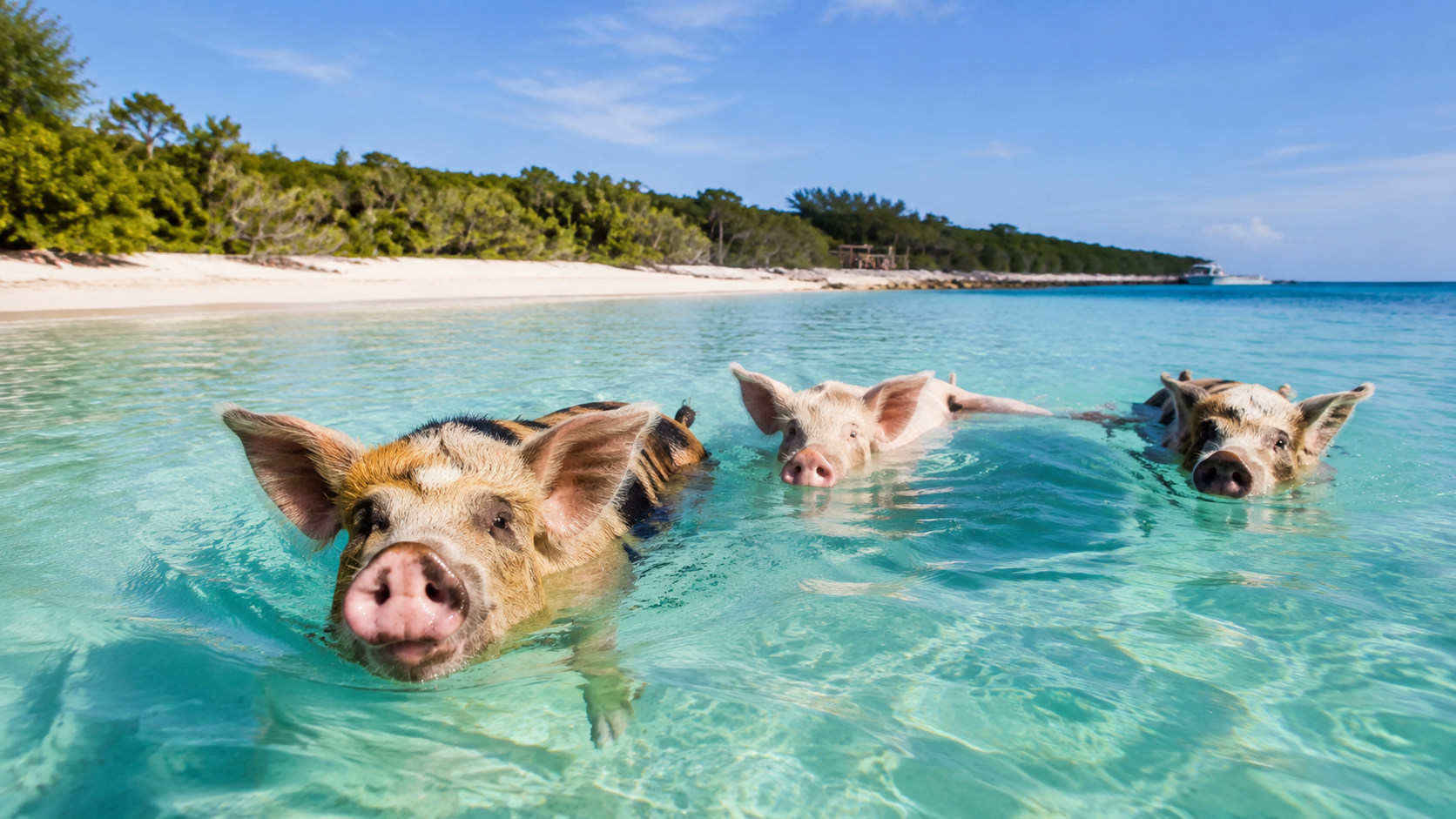
Pig Beach is the informal name for the shoreline of Big Major Cay in Exuma, Bahamas, where a colony of feral pigs lives and swims in the surrounding waters. The beach itself is free to visit and accessible 24 hours daily, though reaching it requires a private boat or tour operator since the cay has no public ferry or dock infrastructure. The best arrival window is between 7:00 and 9:00 AM to avoid the mid-day tour boat rush.
The pigs that define this Exuma cay likely descend from domesticated stock left by sailors or farmers decades ago, though their exact origin remains unconfirmed. What began as a curiosity became a phenomenon after images of swimming pigs circulated online in the early 2010s. Today the colony numbers around twenty animals, ranging from piglets to full-grown sows, all habituated to human contact and conditioned to approach boats for food. Understanding what is Pig Beach in Bahamas means recognizing both its appeal and its logistics. Big Major Cay is a protected uninhabited island roughly 80 miles southeast of Nassau, reachable only by private charter or group excursion from Staniel Cay or George Town. No commercial ferry serves the island. Most visitors arrive on half-day or full-day boat tours that combine the pig encounter with snorkeling stops at Thunderball Grotto or the nearby nurse shark shallows. Independent travelers can hire a local captain from Staniel Cay Marina, though rates typically start at several hundred dollars for a private trip. The pigs roam freely along a crescent of white sand backed by low scrub vegetation. They enter the water voluntarily, swimming out to greet approaching vessels in search of food. Tour operators bring carrots, apples, and other approved produce; feeding bread or processed snacks harms the animals and is discouraged by Bahamian authorities. The water remains shallow for thirty feet from shore, allowing safe interaction in waist-deep conditions. Crowds peak between 10:00 AM and 2:00 PM when multiple tour groups converge. Visitors arriving in the narrow early-morning window find fewer boats, calmer pigs, and better light for photography. Pig Beach is not a formal attraction with infrastructure. There are no restrooms, shade structures, or freshwater sources on Big Major Cay. Visitors should plan accordingly and carry reef-safe sunscreen, as the surrounding waters are part of the Exuma Cays Land and Sea Park. The experience lasts as long as your boat remains anchored, typically twenty to forty minutes on group tours and longer on private charters.
“The pigs enter the water voluntarily, swimming out to greet approaching vessels in search of food.”
The Best Time to Visit What Is Pig Beach in Bahamas
The best arrival window is 07:00–09:00 to avoid mid-day crowds and ensure a quieter interaction with the pigs. Arriving during this early period allows visitors to experience the beach before the peak volume of tour boats arrives from Nassau and surrounding islands.
Weekday mornings
Minimal—
Visiting on weekdays provides the highest likelihood of a peaceful environment. Early morning arrivals ensure the pigs are active and have not yet been overfed by later groups.
December to April
HighWarm and dry, 75°F–82°F
These months represent the peak tourism season in the Bahamas. Expect higher volume and plan your transit accordingly to arrive within the optimal early window.
May to November
ModerateWarm and humid, 80°F–88°F
This period includes the hurricane season, which may impact boat schedules. Visitor numbers are generally lower compared to the winter months, offering more space on the beach.
Verdict: The best time to visit is during the weekday morning hours of 07:00–09:00, ideally during the shoulder months of April or October.
Entrance Fees and Costs for What Is Pig Beach in Bahamas
There is no cost to access Pig Beach itself. Expenses are entirely dependent on the private boat or tour operator chosen for transport to Big Major Cay.
While the beach has no entrance fee, visitors pay for the transportation required to reach the island.
Rules for Visiting What Is Pig Beach in Bahamas
The pigs at Big Major Cay are wild animals in a fragile island ecosystem. Following basic guidelines protects both the animals and the natural environment that makes this beach unique.
Do
- Feed pigs only approved foods provided by your tour operator.
- Keep a respectful distance and let pigs approach you.
- Rinse off any sunscreen before entering the water with pigs.
- Stay in designated swimming areas to avoid disturbing wildlife.
- Dispose of all trash properly and leave no items on the beach.
Don't
- Don't feed pigs human snacks, alcohol, or processed foods.
- Don't chase, corner, or grab pigs for photos.
- Don't touch or disturb other wildlife on the cay.
- Don't leave belongings or litter on the beach.
- Don't apply lotions or sprays near the water where pigs swim.
Interesting Facts About What Is Pig Beach in Bahamas
The origins of the pigs on Big Major Cay are a blend of local history and maritime legend. While many speculate about shipwrecks or pirate origins, the most accepted account points to agricultural relocation by local residents.
The pigs were likely moved to Big Major Cay from Staniel Cay in the 1990s to remove them from residential areas.
Local farming solution
Residents relocated the herd to the uninhabited island to eliminate farm odors in their village while maintaining a local food source.
Learned swimming behavior
The pigs began swimming out to boats after learning to associate approaching vessels with food deliveries from locals and sailors.
Debunking pirate myths
Popular stories involving 17th-century pirates dropping off pigs as rations are considered romanticized folklore by long-time residents.
Uninhabited island home
Big Major Cay remains an uninhabited island, and the pigs are not native to the local ecosystem.
Diverse island inhabitants
Beyond the famous swine, the island is home to other animals like goats and stray cats.
Modern conservation efforts